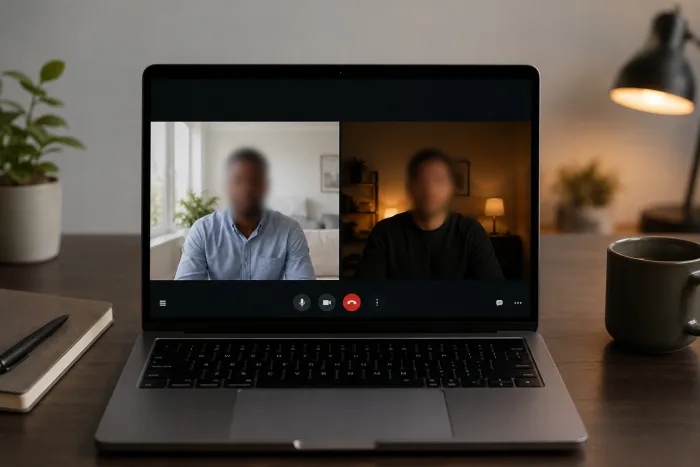
The first two weeks of most remote engagements are not spent building. They are spent figuring out how the other person works. What response time to expect. Whether a quiet week means everything is fine or something has gone wrong. Whether feedback that sounds like a suggestion is actually a requirement. Whether the timeline that was agreed at the start is still the real timeline or something everyone has quietly stopped believing.
None of this is written down anywhere because it feels presumptuous to state it. The developer does not want to sound like they are managing the client before the relationship has even started. The client does not know what to ask because they have never worked with a remote developer before, or the ones they worked with before never told them what they needed to know.
The result is that the actual working relationship gets negotiated silently, through trial and error, during the first sprint, which is the most expensive time for that negotiation to happen. This post is the version of that conversation most developers wish they could have on day one but rarely do. It is written for the client, not the developer, because the client is the one who can change how the first two weeks go.
The first two weeks of most remote engagements are spent figuring out how the other person works, not building the product. That negotiation is happening whether you name it or not.
WHAT DEVELOPERS WISH CLIENTS UNDERSTOOD
Silence does not mean nothing is happening, but it should not be the default
A developer who has not messaged in three days might be deep in a difficult problem, might be blocked on something they have not flagged, or might genuinely have nothing to report yet. From the client side, all three look identical: silence. And silence, across a timezone, with no visibility into what is actually happening, produces anxiety that compounds the longer it continues.
Good developers know this and communicate proactively specifically to prevent it. But clients can accelerate this by setting the expectation explicitly at the start: a brief update at a specific cadence, even when there is nothing dramatic to report. "Still working through the payment integration, expect to have it done by Thursday" costs thirty seconds to write and removes days of client uncertainty.
The developers who communicate well are not doing something extraordinary. They are doing something simple that most clients never ask for because they do not know they can.
A vague brief costs more than a detailed one, even though it feels faster to write
A client who says "build me something like Notion but for my industry" believes they have given clear direction. What they have actually given is a starting point for a much longer conversation that now has to happen through back-and-forth clarification, which is slower and more expensive than if the clarity had existed from the start.
Every gap in the brief becomes a question the developer has to ask, or worse, a decision the developer has to make on your behalf without knowing if it matches what you actually wanted. Both cost time. The first costs time explicitly, through delayed responses across a timezone. The second costs time invisibly, through rework when the assumption turns out to be wrong.
This is not a demand for a fifty page specification before the first line of code is written. It is a case for spending an extra hour before the engagement starts getting specific about who the product is for, what problem it solves, and what the non-negotiables are, because that hour saves days later.
Feedback that sounds like a suggestion gets treated like one
A client who says "maybe we could try making the button a bit bigger, just an idea" is often communicating a requirement in the language of a suggestion, either out of politeness or because the client is not confident enough in their own judgment to state it directly. The developer, taking the feedback at face value, treats it as optional and may not act on it immediately.
Weeks later the client is frustrated that the feedback was not addressed, and the developer is confused because they genuinely thought it was a nice-to-have rather than a requirement. This misalignment is avoidable with one habit: say what you mean at the confidence level you actually hold it. If something needs to change, say it needs to change. If it is genuinely a suggestion to consider, say that too. The ambiguity in between is where most feedback gets lost.
Feedback delivered as a polite suggestion gets treated like a suggestion. If something needs to change, say it needs to change. The ambiguity in between is where most feedback gets lost.
The timeline everyone agreed to is not the same as the timeline everyone believes
Projects drift. Scope grows, priorities shift, unexpected complexity surfaces. This is normal and does not indicate a problem with the developer or the engagement. What causes real damage is when the timeline that was agreed at the start continues to be referenced as though nothing has changed, while everyone privately knows it is no longer realistic.
A developer who sees the timeline slipping and does not say so is protecting the client from a difficult conversation in the short term and setting up a much more difficult one later, when the deadline arrives and the work is not done. A client who wants an honest developer needs to make it safe for that developer to say "this is going to take longer than we thought" without treating it as a failure. The engagements that stay healthy are the ones where timeline changes get renegotiated in real time rather than discovered at the deadline.
A good developer will push back, and that is a feature, not a problem
Clients sometimes interpret pushback as a developer being difficult or overstepping their role. In most cases the opposite is true. A developer who says "I can build that, but I think it will create this problem for your users, here is what I would suggest instead" is exercising exactly the judgment you are paying for.
The alternative, a developer who implements every request literally without ever questioning whether it serves the underlying goal, produces a product that technically matches the specification and fails to solve the problem the specification was meant to address. Clients who want that judgment applied need to create space for it, by responding to pushback with curiosity rather than defensiveness, and by making clear from the start that disagreement is welcome when it is grounded in the product rather than personal preference.
WHAT A GOOD BRIEF LOOKS LIKE BEFORE THE FIRST CALL
The single highest-leverage thing a client can do before engaging a remote developer is arrive at the first conversation with a brief that answers these questions, even roughly.
Who is this for. Not a demographic category but a specific description of the person who will use this product, what they are trying to accomplish, and why the current options fail them.
What does success look like in three months. A specific, ideally measurable outcome that both parties can point to and agree the engagement achieved or did not.
What are the non-negotiables. The two or three things about the product that cannot be compromised, whether that is a specific integration, a compliance requirement, or a design principle that matters to the brand.
What is the actual budget and timeline, stated honestly. Not an aspirational number, the real constraint. A developer who knows the real constraint can make better trade-off recommendations than one working from an inflated number that gets revised downward later.
How do you want to communicate, and how often. Daily updates, weekly summaries, async only, occasional calls. Stating this preference removes the guesswork for the developer in the first week.
None of this needs to be formal. A page of notes, even bullet points typed in ten minutes before the first call, is enough to change the trajectory of the entire engagement. The developers who do well with a client are not the ones working from the most detailed specification. They are the ones working from the clearest understanding of what actually matters, and a brief that answers these five questions gives them that understanding from day one.
THE RELATIONSHIP THAT ACTUALLY WORKS
The remote engagements that go well share a pattern that has nothing to do with technical skill and everything to do with how the relationship is conducted. Both sides communicate proactively rather than waiting to be asked. Feedback is delivered at the confidence level it is actually held. Timeline changes get renegotiated as they happen rather than discovered at the deadline. Pushback is treated as a sign the developer is engaged rather than a sign they are difficult.
None of this requires a framework or a tool. It requires both parties to say what they actually mean, at the moment they mean it, rather than relying on the other person to infer it correctly across a timezone with no shared context beyond a Slack channel and a project brief.
The client who reads this and adjusts even two or three of these habits will notice the difference in the first two weeks of their next engagement. Not because the developer changed. Because the friction that usually gets negotiated silently during the most expensive part of the project got named and addressed before it had the chance to cost anything.
CLOSING THOUGHT
The best remote engagements do not feel remote. They feel like a close working relationship that happens to be conducted across a distance. Getting there does not require finding an exceptional developer. It requires both sides doing the small, unglamorous work of saying what they mean clearly and early, before the ambiguity has a chance to become expensive. That work belongs as much to the client as it does to the developer, and it starts before the first line of code is written.
If you are about to start a remote engagement and want a conversation about how to set it up well from the first call, I am happy to have that conversation before anything is signed. Tell me about what you are building.